

What Are Casino Bonuses and Why Do They Exist
Casino bonuses are promotional offers designed to attract new players and keep existing ones engaged. They come in various forms, like welcome packages, free spins, or cashback deals, and are a core part of online gambling marketing. The idea is simple: casinos give you extra funds or spins to play with, hoping you’ll enjoy the games enough to deposit your own money later. For players, bonuses can stretch a small bankroll further, allowing more spins on slots or extra hands at the blackjack table without risking as much of their own cash. However, these offers aren’t just free money. They come with terms and conditions, particularly wagering requirements, which dictate how much you need to bet before withdrawing any winnings.
Bonuses serve a dual purpose. For casinos, they’re a cost-effective way to stand out in a crowded market. A generous welcome bonus can make one site more appealing than another, even if the game selection is similar. For players, bonuses provide a low-risk way to test games, learn strategies, or simply enjoy more gameplay. For example, a 100% match bonus on a 1,000 KES deposit effectively doubles your starting balance, giving you 2,000 KES to play with. But this isn’t a 2,000 KES gift. You’ll need to meet the wagering requirements before you can cash out any profits, which is where many players get tripped up.
Understanding the different types of bonuses is the first step to using them wisely. Some are straightforward, like no-deposit bonuses, while others, such as reload bonuses or loyalty rewards, are more complex. Each type has its own rules, and not all bonuses are created equal. A 50 free spins offer might sound great, but if the wagering requirement is 50x, you’ll need to bet the winnings 50 times over before withdrawing. Knowing these details upfront can save you from frustration later.
The Most Common Types of Casino Bonuses You’ll Encounter
Welcome bonuses are the most familiar type, often advertised as a percentage match on your first deposit. For instance, a casino might offer a 150% match up to 15,000 KES, meaning if you deposit 10,000 KES, you’ll get an extra 15,000 KES in bonus funds. These are usually tied to wagering requirements, typically ranging from 20x to 40x the bonus amount. Free spins are another popular offer, often bundled with welcome packages or given as standalone promotions. They’re usually tied to specific slot games, like Book of Dead or Starburst, and come with their own wagering rules, often 30x to 50x the winnings.
No-deposit bonuses are a favorite among players because they don’t require any initial deposit. You might get 200 KES or 10 free spins just for signing up. While these sound like easy money, they almost always come with high wagering requirements, sometimes as much as 60x or 70x. This means if you win 1,000 KES from a no-deposit bonus, you’d need to bet 60,000 KES before cashing out. Reload bonuses target existing players, offering a smaller percentage match on subsequent deposits. For example, a 50% reload bonus on a 5,000 KES deposit would give you an extra 2,500 KES, but again, with wagering requirements attached.
Cashback bonuses are a safety net for players, refunding a percentage of losses over a set period. If you lose 10,000 KES in a week, a 10% cashback bonus would return 1,000 KES to your account. These are usually easier to withdraw, with lower wagering requirements, often around 10x to 20x. Loyalty programs and VIP schemes reward frequent players with points that can be exchanged for bonuses, free spins, or even cash. The more you play, the more points you earn, and the better the rewards. However, even these rewards often come with wagering conditions, so it’s important to read the fine print.
How Wagering Requirements Work and What They Really Mean
Wagering requirements are the rules that dictate how much you need to bet before withdrawing bonus winnings. They’re usually expressed as a multiplier, like 30x or 40x, which means you must wager the bonus amount 30 or 40 times over. For example, if you receive a 10,000 KES bonus with a 30x wagering requirement, you’d need to bet a total of 300,000 KES before cashing out any profits. This isn’t as straightforward as it sounds, because not all games contribute equally to meeting these requirements. Slots usually count 100%, while table games like blackjack or roulette might only count 10% or 20%, meaning you’d need to bet much more to clear the requirement.

The math behind wagering requirements can be deceptive. A 20x requirement on a 5,000 KES bonus means you need to bet 100,000 KES, but if you’re playing a game that only contributes 10% to the requirement, like baccarat, you’d actually need to bet 1,000,000 KES to meet the condition. This is why many players prefer slots when clearing bonuses, as they contribute fully to the requirement. That’s why it’s crucial to understand Slot Payout Percentages, as slots tend to have lower return-to-player rates, increasing the likelihood of long-term losses. It’s a trade-off: easier to clear the requirement but harder to keep your winnings.
Certain casinos provide bonuses where the bonus funds withdrawal isn’t allowed, and these funds are deducted from your balance after fulfilling the wagering conditions. For example, if you deposit 5,000 KES and get a 5,000 KES sticky bonus, your total balance is 10,000 KES. If you win 20,000 KES, the casino deducts the 5,000 KES bonus, leaving you with 15,000 KES. This is different from “cashable” bonuses, where the bonus itself can be withdrawn once the requirement is met. Sticky bonuses are riskier because you can’t walk away with the bonus funds, only the profits. Always check whether a bonus is sticky or cashable before claiming it.
Calculating Wagering Requirements in Real Money Terms
To understand wagering requirements in real terms, you need to break down the numbers. Let’s say you claim a 10,000 KES bonus with a 35x wagering requirement. This means you need to bet 350,000 KES before withdrawing any winnings. If you’re playing slots with a 96% return-to-player rate, you can expect to lose about 4% of your bets over time. In this case, that’s roughly 14,000 KES lost while trying to clear the requirement. If you win 20,000 KES during this process, you’d walk away with 6,000 KES after accounting for the losses. This is why high wagering requirements can be so punishing, they force you to bet large sums, increasing the likelihood of losing your bonus and any winnings.
The contribution percentage of different games plays a huge role in how quickly you can meet the requirement. For example, if a casino only counts 10% of bets placed on roulette toward the wagering requirement, a 35x requirement on a 10,000 KES bonus would effectively become 350x, or 3,500,000 KES in bets. This is why many players avoid table games when clearing bonuses, as the math simply doesn’t work in their favor. Slots, on the other hand, usually count 100%, making them the fastest way to meet the requirement, even if the odds of winning are lower. Some casinos even exclude certain games entirely, so it’s crucial to check the terms before starting.
Another factor to consider is the maximum bet limit. Many casinos cap the amount you can bet per spin or hand while clearing a bonus, often around 100 KES to 500 KES. This is to prevent players from placing a few large bets to quickly meet the requirement. If you’re used to betting 1,000 KES per spin, you might find yourself restricted to 200 KES, which can be frustrating. These limits are designed to extend the time it takes to clear the requirement, giving the casino more opportunities to recoup the bonus funds. Always check the maximum bet limits before claiming a bonus, as they can significantly impact your strategy.
Which Games Count Toward Wagering Requirements
Not all casino games contribute equally to wagering requirements. Slots are the most straightforward, usually counting 100% toward the requirement. This means every shilling you bet on slots goes directly toward meeting the wagering condition. Popular slot games like Gonzo’s Quest, Mega Moolah, or Dead or Alive are often included, but some casinos exclude jackpot slots or games with high volatility. For example, if a casino offers a 20x wagering requirement on a 5,000 KES bonus, betting 5,000 KES on slots would reduce the requirement by 5,000 KES, leaving you with 95,000 KES left to bet.
Table games like blackjack, roulette, or baccarat are trickier. Most casinos only count 10% to 20% of bets placed on these games toward the wagering requirement. This is because table games have a lower house edge, meaning the casino makes less money from them over time. For example, if you bet 10,000 KES on roulette, only 1,000 KES to 2,000 KES might count toward the requirement. This makes it nearly impossible to clear a bonus by playing table games alone, as the effective wagering requirement becomes much higher. Some casinos even exclude table games entirely, so it’s essential to check the terms before assuming they’ll count.
Video poker and specialty games like keno or scratch cards often fall into a gray area. Some casinos count them 100%, while others exclude them or count them at a reduced rate. For example, a casino might count video poker at 20%, meaning a 10,000 KES bet would only contribute 2,000 KES toward the requirement. Live dealer games are another category to watch. Some casinos treat them like table games, counting only 10% to 20% of bets, while others exclude them entirely. Always check the game contribution table in the bonus terms, as this can make or break your ability to clear the requirement. If a game isn’t listed, assume it doesn’t count toward the wagering requirement.
How to Spot a Good Bonus With Fair Wagering Requirements
A good casino bonus has reasonable wagering requirements, typically between 20x and 35x. Anything higher than 40x is usually a red flag, as it becomes nearly impossible to clear without losing most of your winnings. For example, a 50x requirement on a 10,000 KES bonus means you’d need to bet 500,000 KES, which is a steep hill to climb. Look for bonuses with lower multipliers, like 20x or 25x, as these give you a better chance of walking away with profits. Also, pay attention to the maximum cashout limit. Some bonuses cap your winnings at 5x or 10x the bonus amount, meaning even if you win big, you can’t withdraw more than a set limit.
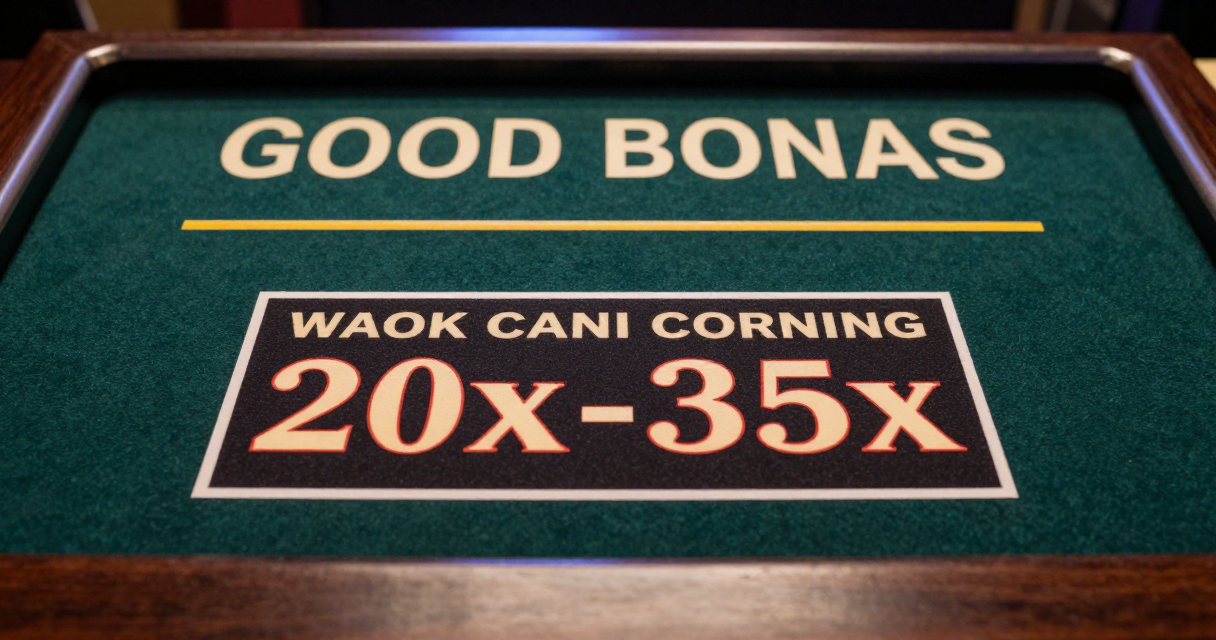
The game contribution percentage is another key factor. A bonus with a 30x requirement might seem fair, but if table games only count 10%, it’s effectively a 300x requirement. Always check which games contribute fully and which are excluded or reduced. Slots are the safest bet, as they usually count 100%, but even then, some casinos exclude certain titles. Look for bonuses that allow a mix of games, so you’re not forced to play only slots. Also, check the maximum bet limit. If you’re used to betting 1,000 KES per spin, a 200 KES cap can be frustrating, as it slows down your progress toward meeting the requirement.
Transparency is crucial when evaluating a bonus. A good casino will clearly state the wagering requirements, game contributions, and any other terms upfront. Avoid bonuses with vague or hidden conditions, as these are often designed to trip you up. For example, some casinos require you to wager both the deposit and the bonus, which can double the amount you need to bet. Others might impose time limits, like 7 or 14 days, to meet the requirement. If you’re a casual player, a short time limit can make it impossible to clear the bonus. Always read the terms carefully, and if something isn’t clear, ask customer support for clarification before claiming the offer.
Common Mistakes Players Make With Casino Bonuses
One of the biggest mistakes players make is not reading the bonus terms before claiming an offer. A flashy “100% match up to 20,000 KES” might sound amazing, but if the wagering requirement is 50x, you’re signing up for a marathon of betting. Many players assume all bonuses work the same way, only to realize too late that the terms are stacked against them. For example, a 50x requirement on a 10,000 KES bonus means you’d need to bet 500,000 KES, which is a huge commitment. Always check the fine print, including the wagering multiplier, game contributions, and any maximum bet limits.
Another common error is ignoring the game contribution percentages. Players often assume that all games count equally toward the wagering requirement, but this is rarely the case. For example, if you’re a blackjack fan and claim a bonus with a 30x requirement, you might be shocked to learn that only 10% of your bets count. This means you’d need to bet 3,000,000 KES to meet the requirement, which is nearly impossible for most players. Slots are usually the safest bet, but even then, some casinos exclude certain titles. Always check which games contribute fully and which are excluded or reduced before starting.
Many players also fall into the trap of chasing losses while trying to clear a bonus. If you’re down 5,000 KES and the wagering requirement is still far from met, it’s tempting to keep betting in hopes of recovering your losses. However, this often leads to even bigger losses, as the house always has an edge. A better strategy is to set a loss limit before you start and stick to it. For example, if you’re not willing to lose more than 2,000 KES, stop playing once you hit that mark. Bonuses are meant to extend your gameplay, not drain your bankroll. If you find yourself constantly chasing losses, it’s a sign to take a break and reassess your strategy.

I’ve spent the last decade dissecting everything from classic slot volatility to the latest crash game mechanics, driven by a genuine fascination with how RNG and math drive entertainment. Whether I’m tracking tournament meta-changes or hunting for hidden features in new mini-games, my goal is to share honest insights that help players understand the games they love.